 Four days ago, we seeded portions of our backyard with Scott’s PatchMaster Seed Mix. This is the 2nd time we’ve used this brand. The first time, we had good results getting grass to grow in some bare spots, so we decided to use it again — this time, to cover a much larger area.
So far, so good.
Here’s why we chose Scott’s Patch Master Tall Fescue Mix instead of that brand with the familiar name: Patch Perfect.
Last May was the first time we went looking for a grass seed mix to repair a few bare spots in our lawn.
Mostly, these were just small areas that got a lot of wear from our dogs. Plus, there was an areas along with the bottom of the steps into the backyard — which happens to get a lot of foot traffic.
I was on a mission to try Patch Perfect — that product I’d seen numerous times in late-night infomercials. It seemed like a good product. And they said it worked fast. Plus, it wasn’t all that expensive. Only thing: I wouldn’t have it right away. Instead it would take several days to ship it to me.
So, that’s when we decided to see what the local Home Depot had in terms of lawn repair seed mixes.
Seed Mixes Available At Home Depot
I was hopeful that they would carry the Patch Perfect brand, but they didn’t. So we bought what appeared to be a very similar product from Scott’s. It’s their PatchMaster Tall Fescue Mix.
It comes in a big 5lb seed bag, but it’s extremely lightweight because it mostly contains “filler” — or recycled paper products that surround the grass seeds themselves. (Actually, it’s a combination of this recycled “mulch”, fertilizer, and grass seed.) This cushiony mulch is what gives the grass seeds something to germinate in (rather than having to till your yard in order to loosen the dirt first).
The mulch combination kind of looks like insulation — though it’s not as coarse, and not at all harmful if you breathe it or get it on your skin. Each 5lb bag covers 100 square feet.
Our Tips For Using Scotts Patch Master:
#1 – To spread it, we do this: Grab a big handful, then use both hands in a “rubbing” motion to break up the seed/filler mix between your hands. This way, it drops in small chunks (rather than large clumps!) onto the ground.
#2 – I think the package says not to lay it thicker than 1/4-inch deep. Which means… it doesn’t take much. Plus, the more you “pile it on” the more you’re actually wasting. The biggest thing is to try to get even coverage over the spots where you want grass to grow. Any area of dirt that doesn’t have PatchMaster on it won’t be growing grass. (Though the surrounding grass will spread there as it grows, in no time.)
#3 – Water much, and water often. This cannot be overstated. You don’t want water to puddle up (especially for that very first watering when the seeds are really loose and can get washed away), but you do want every bit of the seed/filler mix to be thoroughly wet. And, the more it stays wet, the faster those seeds will germinate. We’ve made the mistake of letting some areas dry out too much in between waterings (evidenced by the patch mix turning hard and crunchy). For best results, you don’t want the patch mix to be hard to the touch. Instead, it should always be a little bit moist.
#4 – If you have dogs, it’s safe to use around them, though I wouldn’t allow them to eat any of it. Ours have pretty much left it alone. In fact, now that our backyard has so many areas with this grass seed patch mix, dogs have been tromping through those areas on several occasions. But the PatchMaster mix pretty much stays in place. Unless the dog decides to gets a hard running start directly from this area, then for the most part, walking or even running across it doesn’t loosen up any of the mix. (High traffic areas are another story — constant foot traffic of any kind will stunt the growth of new grass.)
In the end, I’m soooo glad we found Scott’s PatchMaster and used that instead of Patch Perfect. Why? Because many have not had good luck with Patch Perfect. And we happen to know a handful of people who, like us, have had good results from using Scott’s Patch Master.
Photos from the 1st time we used Scott’s PatchMaster Seed Mix in small areas:
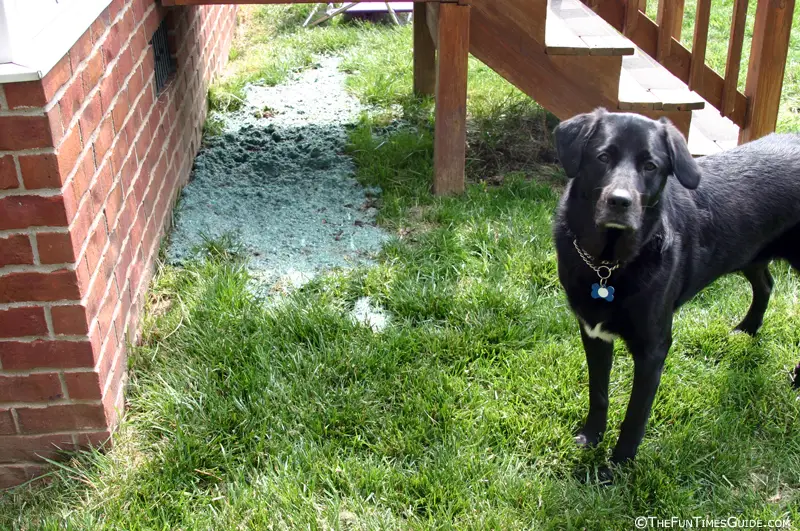
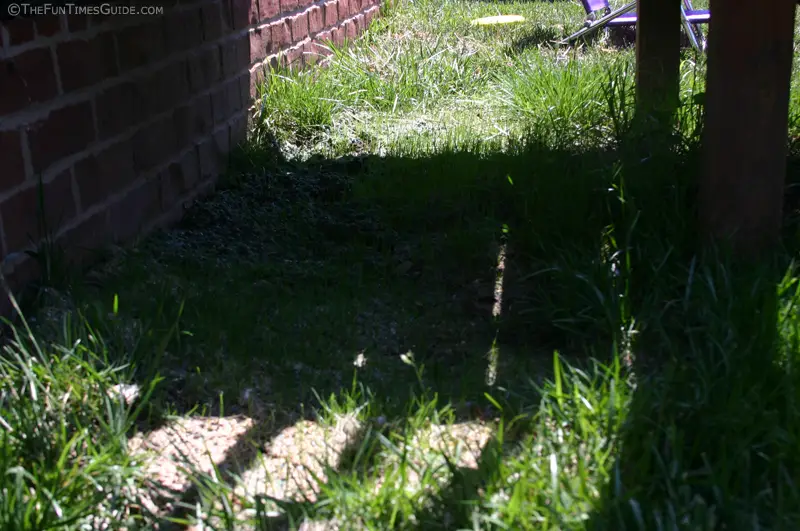
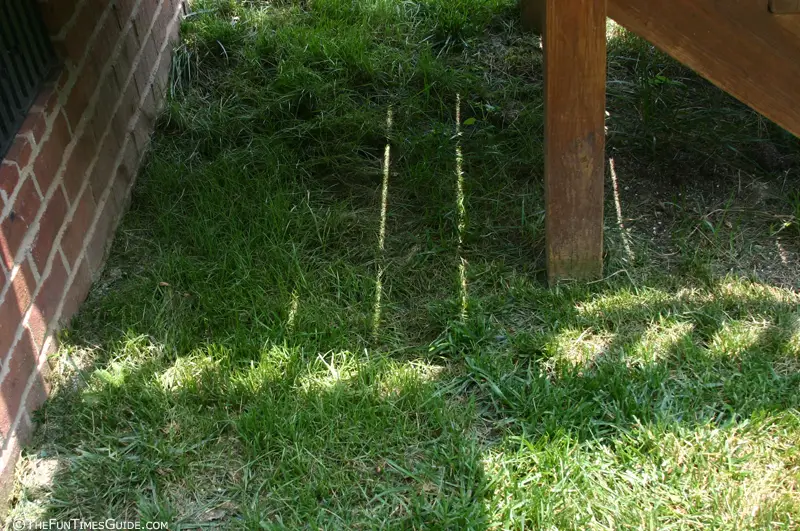
Summary: The grass grew fairly rapidly. But the Tall Fescue Mix is not a good choice for areas that don’t get a lot of sun. Instead, we should have used Scott’s PatchMaster Sun & Shade Mix.
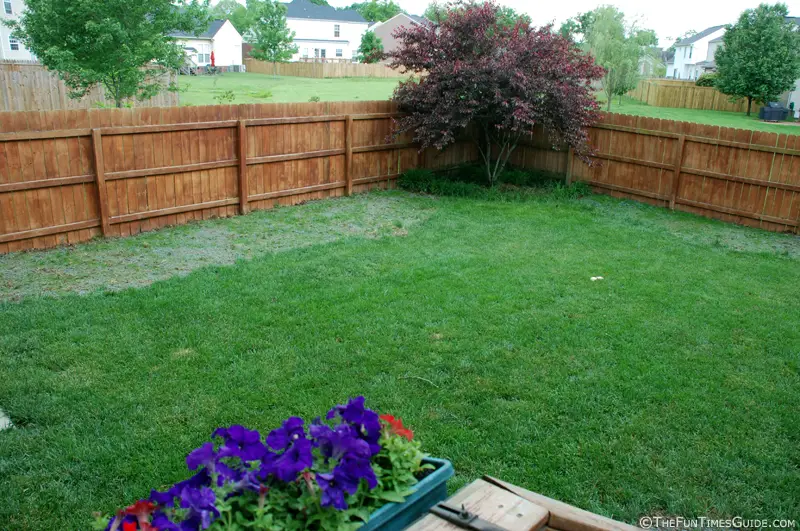
Photos from our 2nd time using Scott’s Patch Master Seed Mix on much larger areas:
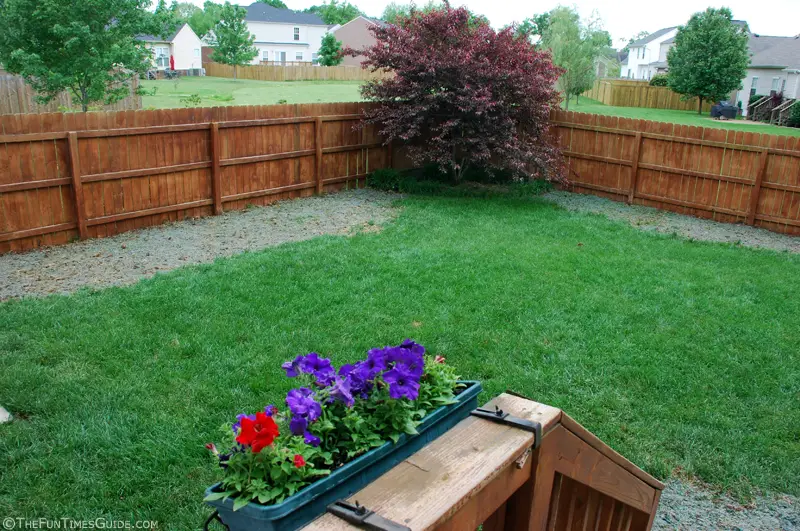
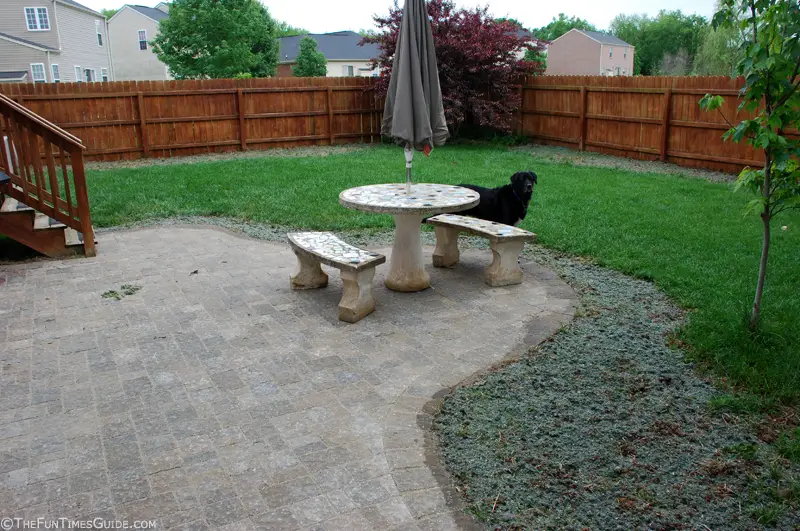
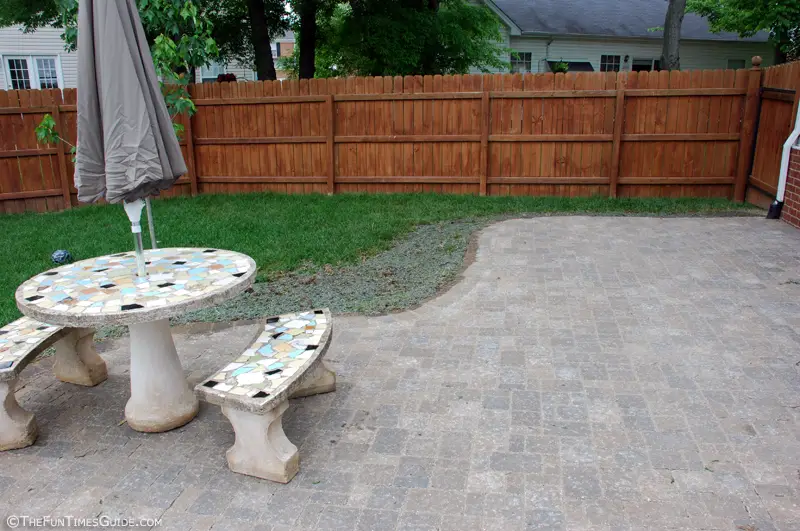
Summary: It’s still early, but the new grass appears to be coming up faster and stronger than before — and it’s only been 4 days! We attribute this to much more water, and much more sun than the previous time. We used 5 of the 5lb bags to do the areas you see here — all around 3 sides of the patio and along 2 sides of the fence.
Photos at 6 days:
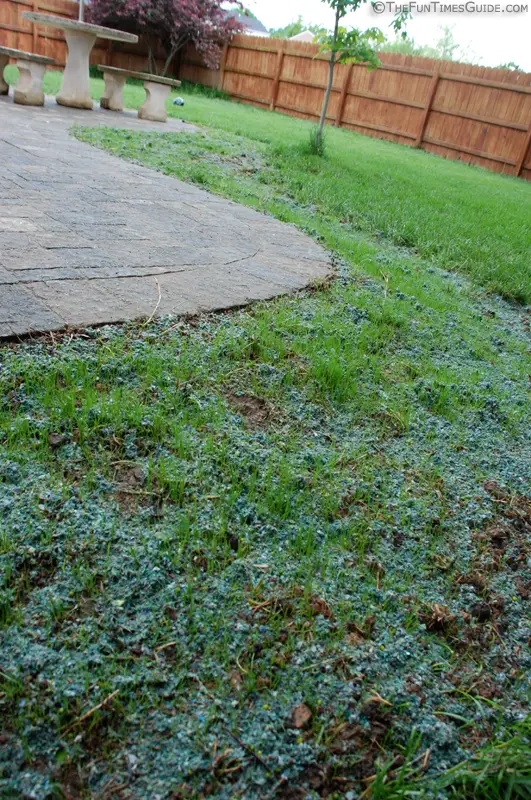
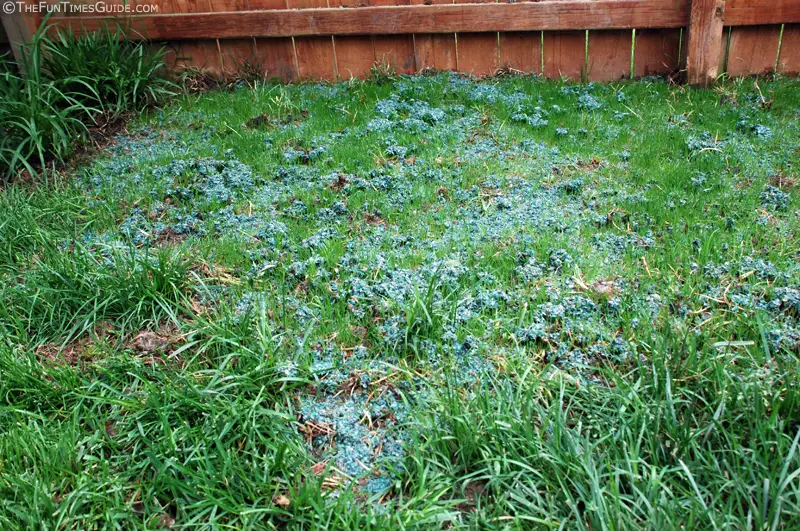
Summary: You can see some fairly strong blades of grass popping through the seed/paper mix. Looks like most of the areas should be coming up pretty evenly — with continued watering.
Photos at 8 days:
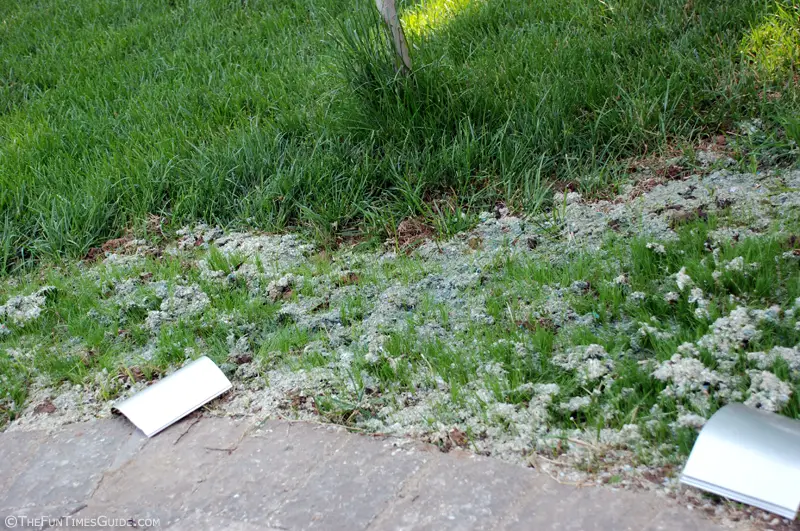
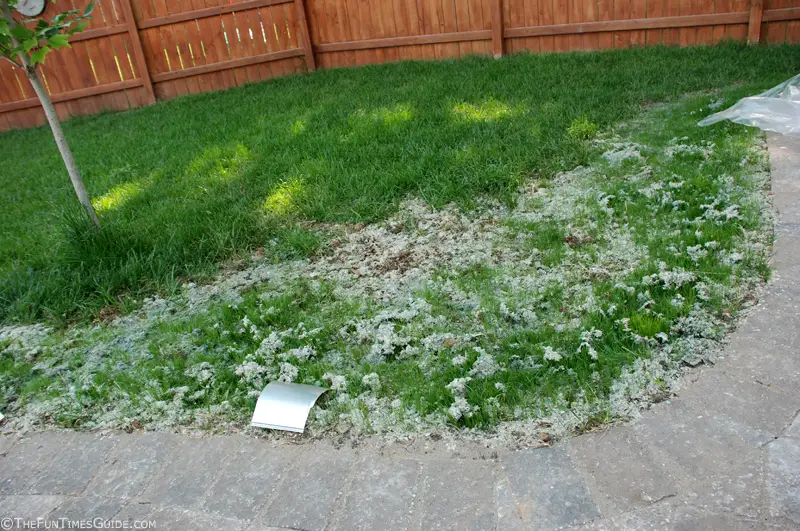
Summary: More new grass growth is happening fast at this point. We’ve been pleasantly surprised by the Scott’s PatchMaster grass seed mix.
Photos at 10 days:
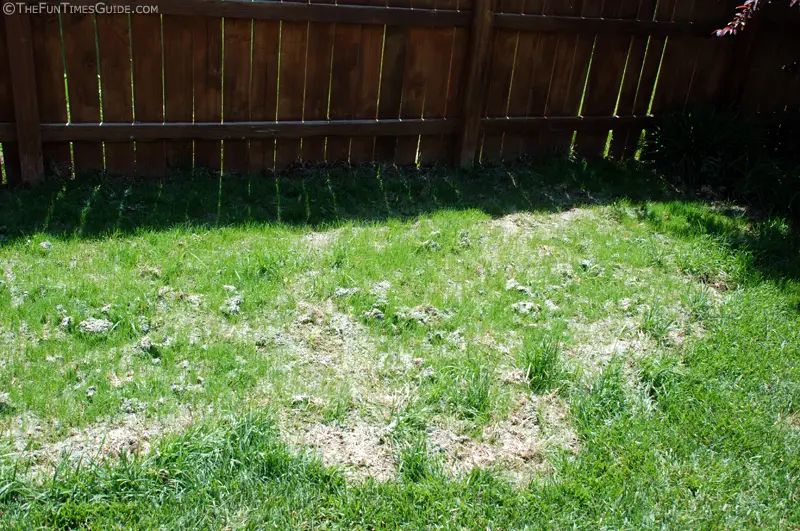
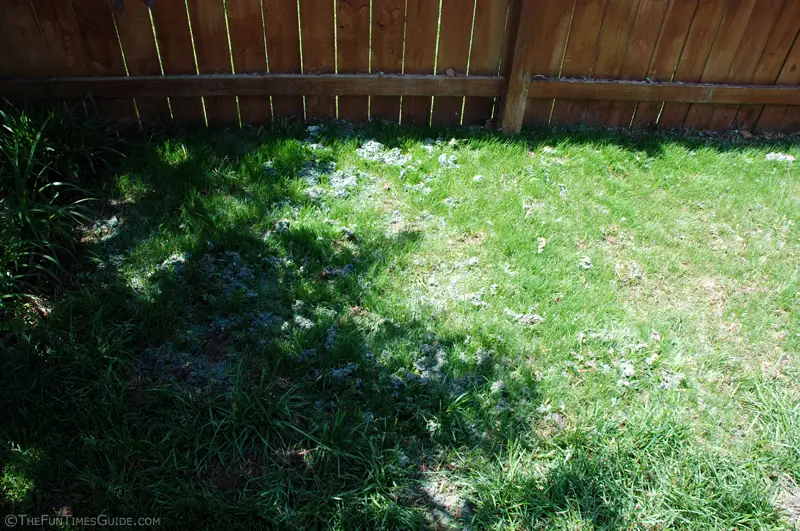
Summary: You can see the grass is starting to pop through pretty thickly now, and the patches of the recycled paper are starting to diminish. In effect, the paper parts just sink to dirt level — in between the blades of grass. That is, as long as you’ve watered the area enough and none of the paper parts have actually turned hard. If you have “hardened” sections of the seed & paper mix lying around (we had a few), then it will just take longer for the blades of grass to grow strong enough underneath those areas to grow through the hardened paper. Eventually, the paper parts will be pushed to the side by as the blades strengthen and it will actually disintegrate in time.
Photos at 12 days:
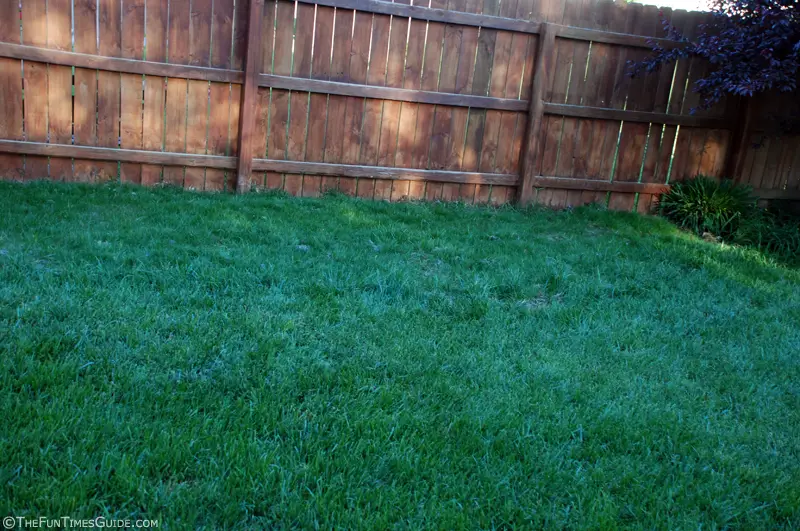
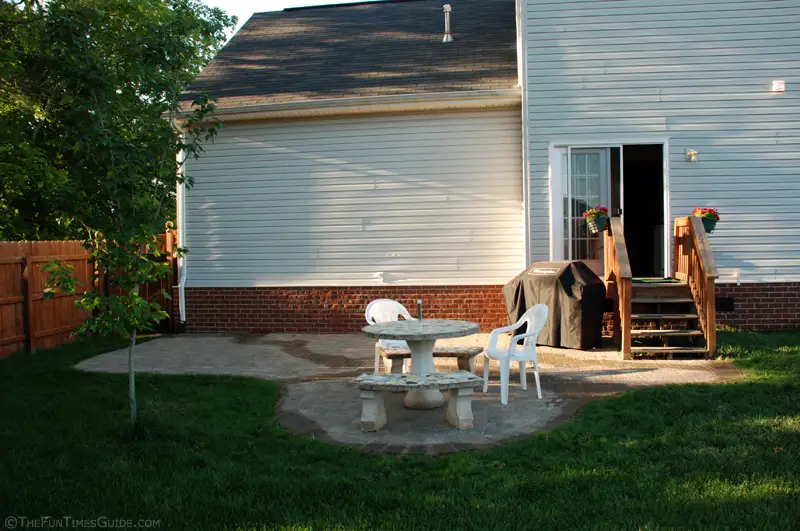
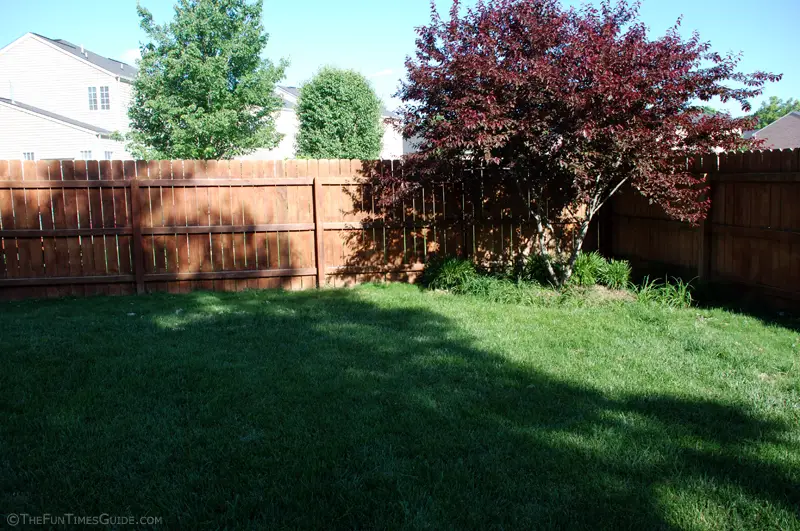
Summary: For the most part, this was a quick and easy project… growing grass over the course of 12 days. It’s still very fine grass, and while we are walking on it daily, I wouldn’t exactly want to run a heavy lawnmower over it just yet. I want it to toughen up a bit first. A few more days of sunlight, air and rain should do it.