| 0 | 28 Comments
| More

Lynnette

Salt Water Pool Systems: Facts From A Swimming Pool Expert

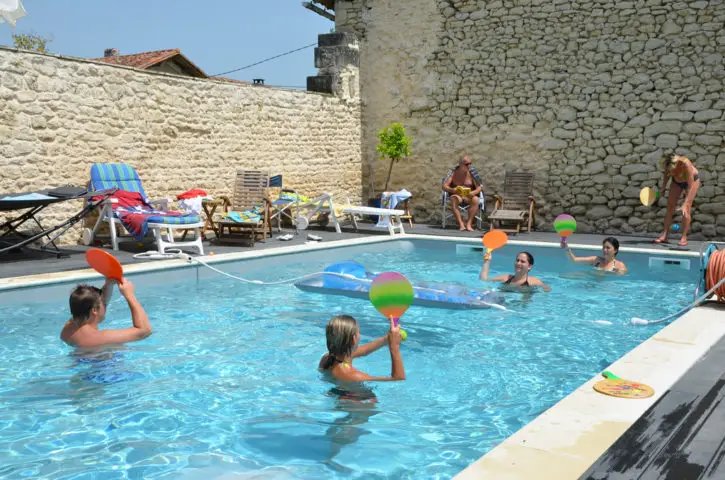
swimming-pool-photo-by-cadmanof50s.jpgSteve Bister works at Crystal Waters Pool & Spa. He is a fan of salt water systems in swimming pools.

After reading an article I wrote about salt water pool systems vs chlorine pool systems, Steve sent us some more info about salt water pools. He has graciously given us permission to share that info with everyone here at The Fun Times Guide.

If you have any questions about salt water pool systems, chances are they're answered below...

From Steve:

I build and service pools in the Kansas City metro area. I have installed a lot of salt systems and repaired them as well.

Here are some things to know about salt water systems:

1. The chlorine produced by a salt water system has very positive ph. That reduces eye and skin irritation. The downside is that chlorine loses its ability to sanitize at ph levels over 7.8ppm.

2. Yes it is expensive to replace the cell in a chlorine generator. However, it is a lot like a light bulb. The less the generator has to run, the longer it lasts.

3. As mentioned in other postings, chlorine smell is typically from chloramines. Let me explain. The human body produces ammonia and other organic wastes. When molecules of ammonia and other organic wastes bond with chlorine molecules, it turns into a compound called chloramines. These chloramines are chlorine in an unusable form. When you test your water you will test for free chlorine, and total chlorine. If the Total chlorine level is higher than the free, the difference between the two is chloramines. The appropriate way to deal with these is "breakpoint chlorination". The rule of thumb is super-chlorination to 5x chlormines.

The example is if free chlorine is 2.0 and total chlorine is 4.0, the difference is 2.0. 2x5=10. Raise the chlorine level by 10ppm to breakup the chloramines. This needs to be accomplished with chlorine shock. I prefer to use Calcium Hypochlorite with an active ingredient level of 68% or higher. Simply setting the chlorine generator higher will not necessarily work.

4. Chlorine levels should typically be between 1 ppm and 3ppm. This provides adequate sanitation. However, you could still get algae if other things are not taken care of. If you do get algae, your chlorine level will go down because it is being used up in trying to kill the algae. That leads you to turn up the generator in an attempt to maintain the chlorine level. Turning up the generator causes it to run longer, which makes the cell go bad sooner. In our business, we have had great success using a product made specifically for salt water pools which removes phosphates (perfect algae food), adds levels of salt to the pool, contains enzymes which break down suntan lotions and body oils, and helps to keep the ph down to manageable levels. All of these things make it possible for the generator to operate less which increases cell life.

5. Corrosion can be a problem to metal surfaces in contact with the pool water. No it is not necessarily caused by low ph. It can be caused by improper grounding in the pool (don't worry, this is not a safety hazard in any way) and related equipment through the process of electolysis. There are new products on the market which will help combat this issue, although the issue is a bit too technical for this posting. However, there are also products available for new construction which are less prone to corrosion.

6. Salt water pools are not maintenance free. The key parameters of water balance (chlorine, ph, alkalinity) are still important and need to be tested
for and adjusted on a regular basis. It is also important to remember that the chlorine produced by a chlorine generator is not stabilized. It is important to maintain an adequate level of cynuric acid (also known as "stabilizer" or "conditioner" when you buy it at the pool store) or the sunlight will leach it out of the pool as fast as it can be made.

7. I personally am a fan of salt water pools. The feel of the water is much nicer to your skin, I think they save some money for the consumer, and I think in the end it is actually a "greener" alternative to pool sanitization.

I've not mentioned specific brands or products as I don't know if that is
permitted. However, you are free to contact me at
www.crystalwaterspoolandspa.com for specific product info.


More from Steve:

I just like to educate consumers about their pools. It's a big investment and there is a lot of misinformation out there about salt water systems, even among service professionals. I've been fortunate to be able to work with multiple resources and get information backed up by my own experience in the field."


Thanks so much, Steve! A lot of people had questions about salt water pool systems in my earlier article, and you've answered a lot of those questions here.

By the way... specific products are always A-ok to talk about on The Fun Times Guide. So if anyone wants to mention your favorite swimming pool products in the Comments below... by all means, feel free.

photo by Cadmanof50s


28 Comments

wendy

we have a above ground pool with chlorine in it now. do we have to drain the pool to set up the saltwater system? the chlorine level is very low at the moment.

Arlene

Hey there! I just bought & set up an Intex rectanglur 9x18 pool. The filter/pump that came with it seem to be inadequate and now I am wondering if I should get a salt system or just a bigger sand-filter and pump. I have hard well water, and even though I have put metal remover and chlorine and Muratic acid in it; it is a brownish greenish color. Yuck. Any suggestions? Thanks!! Arlene

Nora

I called the company which the SPP70 Deluxe is now UPP50 Ultra Pure. The site is Ozoneparts.com and the bulb part #3901804.
Hope that helps.

Joe Burris

When the chorine level is low in the summer heat of Texas what do you recommend to raise the free chorine level?

Joyce

Charles, I just found this site due to me searching on how to clean the white (salt) build up on the tile on my salt water pool. The pool company that built my pool 5-1/2 years ago suggested muratic acid. After scrubbing the tile four times there is still a white build up. They have no idea. I called a tile company and they suggested sulfamic acid for material deposits. The pool company looked up the MSDS and suggested not to use since it read to react to chlorine. We are at wits end on this. Can you help? Thanks. I've also read articles about people are switching back to chlorine pools due to the corosive nature of salt and the problems they have had. I've replaced the cell 3 times in 5-1/2 years myself. You can email me at jacdoan@aol.com.

Amy

I am looking for replacement bulbs for the Smart Pure Oxidizer, spp70 Deluxe Commercial Model. I can't find any where on the web. Help!

Charles Burger

Robin,

I own a swimming pool store in New York. I just happened to find this site, and saw your question as I was scanning through. IF you have not yet resolved your issue with buildup (mineral scale), go to a pool store and have them check your calcium hardness levels. It sounds like you have a heavy buildup which not only builds up on pool surfaces but also on your filtration equipment, heating components, etc. If you have questions about results you get from local store email me at foxxpools@gmail.com. J. Burger

Denise

Thanks, I think I might dump and start over, the whole idea of salt is no chemicals, so I am not to excited about the "shock" but I will check with a pool place out here but in Utah they are still not very familiar with the salt water systems
Thanks again

Denis

Thanks Kevin, I will give it a try

Kevin

I dump 2 4 liter jugs of liquid shock in my pool when I close it. every year when i open the pool i have green water and algge forming on the bottom. I never drain it I just start the pool and add more liquid shock and run the pump for 2 days.. Then i do a good vacume on waste and a 2min Backwash..Once all that is done I bring in a sample of my water to the pool store and they test it to see if I need to add any more chemicals at our store this test is a free service.

Denise, I'm definitely no pool expert (I hope someone who is or has experience with this will chime in here), but I wanted to add my $.02 before you had to wait too long.

If it were me (and based on some of our experiences with green water in swimming pools and hot tubs), I would FIRST call a local pool store. They can give you advice ASAP, as well as the proper supplies to try to bring the pool back to normal in the fastest manner.

My gut tells me that you'd want to drain and refill, but I realize that isn't what you want to hear. I'm just thinking salt alone wouldn't fix the problems that are causing the green.

Anyone else have an opinion?

Denise

Please HELP We have a salt water underground pool and love it, we have had no problems BUT it was turned off all winter, it was covered but now the water is kinda a green color, we can see the bottom, its just discolored. Will this go away after we start it up again and add more salt or do we need to drain and refil? also were we suppose to add anything before winters closing?
Thank you

Keith

Did you find the parts? Pool company wants to charge me $157/bulb - need 2. Surely it can be found elsewhere for less. UWQ 825T5/40W is the bulb I need.

Dale Pechan

Has anyone used an ionization system before, and was were the results.

Robin

I need help. I purchased a salt system pool/spa and it was completed in September of '08 (Orlando, FL). I am seeing all kinds of build up on the surface and it feels like sand paper and has a white tint to it. It is even on the metal of my light fixtures. My pool company never gave me any paperwork on in regards to a specific care for my surface or warranty paperwork for that matter. This is my first time ever owning and caring for a pool. Any insight would be greatly appreciated.

gail

I have a salt system can I add dead sea salt or sea salt to make it more of a therapeutic pool?

Kim

I help at a community pool. 168,000 gallons. There are 4 salt water chlorinator cells. 3 pumps that work different parts of the pool. if, by chance, we need to bring up the chlorine level, say before a large group comes in, what's the best way to add shock? Put it in the skimmer baskets? Dump it in the pool?? Another way?? Please help.

Hi Barry,

Call me if it is an UltraPure Ozone Generator and I will give you information regarding our Authorized Service Dealers in your area. All of our replacement parts are also available at www.ozoneparts.com

Thank you,
Brian Richardson
National Service Manager
UltraPure Water Quality, Inc.
877-281-7603 ext. 237
brian@waterquality.net

Barry Shively

Did you find your Ozonator parts. If so, can you provide details as I am in the same boat.

andrea

How is a salt system cheaper to run? I keep reading that salt systems are cheaper to run. I was just told that you need to run the pump a lot long with a salt system for the cell to have time to turn the salt into chlorine. If this is true how is in cheaper? I am thinking of not using our salt system anymore and going back to the "old" way and just adding chlorine to save on electricity.

natasha

We just cleaned out an in ground pool that's all cement and it has had dirty water in it for 3 years from hurricane katrina. We were thinking of making it a salt water pool but aren't sure how to do it. It's 11 foot deep on one side and 6 foot on the other so it's a pretty big pool. There's also a metal ladder coming up off the side would the salt water make an electrical shock?

Hi Tony,

My name is Brian Richardson and I am the Inside Sales & Service Manager at UltraPure Water Quality Inc. We are the manufacturers of the Smartpure SPP70 Ozone Generator that is installed on your pool. If you still require info on where to purchase parts for this unit please give me a call at 877-281-7603 ext. 237 and I would be happy to help you out.

Thach Trinh

I just bought 2 of them from a store in Winter Park, FL 32792 at $90/each. Their telephone number is (407) 678-1277.

Tony Schramm

I am having trouble finding replacement lamps
ultrapure UWQ 825T5/40W can you give me a source for purchase.My system model #SPP70
Thank You
T.Schramm

nigel wade

I have a pool 12mx6m, which i estimate would need about 1,000lbs of salt to reach 3 ppm...what's the best way to dissolve such a large amount?
hoping you can help, nigel wade

darla

I need to know how to get from a clorine opening, to operating the existing salt water system. Can anyone help?

cherie Wilkinson

Hi
I have a quick question. I am looking to remodel a 14 year old pool in Phoenix. I've asked about installing a salt system. One company suggests installing a salt system along with the ozone system - says the ozone system makes the salt system work more efficiently. Is this true in your opinion?
Cherie

Patrick

We have seen a huge demand from our customers for methods outside of chlorine to sanitize the pool. We have outlined the different alternativzes to chlorine below, I hope this helps.

Check out these great alternatives to traditional chlorine.
Alternative sanitizers are the most popular way to sanitize your swimming pool while reducing or even eliminating the use of traditional chemical chlorine. If you're wondering why you would want to limit the use of chlorine, there are a few answers to that question. First of all, traditional chlorine adds an unpleasant smell, taste and even feel to pool water. It contains chloramines which are the component of chlorine that cause red eyes and irritated skin. Chlorine is also infamous for fading bathing suits and pool liners, and turning blonde hair to a lovely shade of green. Aside from these issues, there are increasing health concerns regarding exposure to chlorine and many pool owners are looking for alternative methods of sanitizing their pools.

So which pool alternative sanitizer is the best? It depends on the goal you have in mind. We'll discuss four types below - salt chlorine generators, ozonators, ionizers and mineral purifiers.

Salt Chlorine Generators

Chlorine can be produced in a softer, more natural form by using a salt chlorine generator. This purer form of chlorine does not have the smell or irritants normally associated with traditional chlorine. Salt chlorine generators essentially manufacture chlorine for your pool using fine solar salt. This salt is added to the pool water in a quantity that is far below the human ability to taste it. The salt water then passes through what's known as the cell of the generator. The cell unit, which is plumbed inline between the filter and the pool, contains coated blades which create a small electrical charge as the salt water comes into contact with them. This creates chlorine which is then returned to your pool.

Salt chlorine generators feature a power supply unit that is installed at the electrical source for your pool equipment. The power supply features an LED or digital display that shows your salt and chlorine levels and helps you monitor your water. This unit can be used to �shock� or super-chlorinate your pool if needed. A salt chlorine generator will produce all of the chlorine you need to keep your pool properly sanitized, thus eliminating the need to repeatedly purchase pool chemicals.

Your initial investment for a salt chlorine system is the generator and the salt. Since salt does not evaporate, you will rarely need to add more salt unless heavy rains dilute your pool water or significant water is lost from excessive splashing. The salt cell will eventually need to be replaced as the coating on the blades wears off over time. Cells last about 4 -7 years depending on the manufacturer and how much coating they put on the blades. The cell is not an inexpensive part to replace however, as chlorine prices increase, you will lik ely save money even if you need to purchase a new cell every four years. And it is difficult to put a price on soft, silky water that just feels, smells and tastes better.


AutoPilot Chlorine Generator We recommend the AutoPilot Salt Chlorine Generator for two reasons. The first is that the AutoPilot cell has more coating on the blades which means that it will last longer than other brands. The second is its bypass manifold feature which limits the amount of water flowing through the cell. This also prolongs the life of the cell. AutoPilot offers two power supply options, either the Soft Touch which has an LED display or the Digital which provides a full digital read-out of salt and chlorine levels, water temperature, etc.

--------------------------------------------------------------------------------

Ozonators

Ozone is a natural purifier created in nature by the combination of oxygen in air and the ultraviolet rays of the sun, or by the corona discharge during a lightning storm. Ozone is the clean, fresh scent noticed after a rainstorm. As a natural sanitizer, ozone destroys bacteria, viruses, mold, and mildew and eliminates spores, cysts, yeast, and fungus. Due to its purifying capability, ozone can be used to keep pool water clean and sparkling, providing an alternative to traditional chemicals such as chlorine and bromine.

In the quantities needed for water purification, ozone has no noticeable odor, taste or color. It is not irritating to humans and will not damage pool equipment. Ozone purifies water and air very quickly and efficiently, 3,000 times faster than chlorine, and leaves no by-products except pure oxygen. For over 65 years, ozone has been used to sanitize pools and spas all over the world. Since 1984, all Olympic Games competition pools have been purified with ozone.

Pool ozonators and spa ozonators generate and inject ozone into the water, reducing the need for chlorine or bromine by 60 � 90%. Some residual of traditional chemical is still recommended for complete sanitization but the common complaints of red eyes, irritated skin and harsh odors are eliminated with the use of an ozonator. Some homeowners do use ozonators alone as residential pools are not required to use chlorine. While ozonators represent an upfront investment, they greatly reduce the amount of money spent on chlorine and other chemicals. As concerns increase regarding traditional chemical use, alternative sanitizers such as ozonators are an investment in your family's health and safety well worth considering.

Common replacement parts for ozonators are corona discharge (CD) chips or UV lamps (depending on the model), check valves and tubing. CD chips and UV lamps are both rated for 9,000 hours of operation. Although you can wait for the unit to completely fail before replacing the ozone components, it is better to replace them annually to insure water quality. CD chips have an easily detectable glow indicating that ozone is actually being created. This glow will fade or disappear when ozone output has been diminished. On the other hand, UV lamps will continue to light up for years after the ozone capability has been diminished so the light is not a true indicator. This is why regular replacement is recommended. When a chip or lamp is replaced, it is also a good time to replace the check valve and tubing. Kits are available which contain all of the parts for easy maintenance.


Del Triopure Inyo Pools recommends the Del ozonators for their quality, reliability and solid customer support. One of their newest models is the Del TrioPure which is a combination ozonator and salt chlorine generator. The TrioPure generates ozone for the majority of the sanitization and then the salt chlorine generator kicks in to provide the recommended chlorine residual. This unit eliminates the need to use any traditional chlorine and also the need to purchase a separate ozonator and salt chlorine generator.

--------------------------------------------------------------------------------

Ionizers

Electrolytic mineral ion systems, such as copper-silver ionization, are a proven, effective, non-chemical method to help control bacteria, algae and viruses. The principal of using metals for water purification dates back hundreds of years but the technology really began to develop in the 1960's when the Johnson Space Center conducted a research aimed at the development of a water purifier that required minimal power and no human monitoring. This program produced an electrolytic silver ion generator used to sanitize the potable water supply and waste water system of a spacecraft. NASA released the design information to the industry and ionization has since been used for pools, spas, cooling towers and other applications.

Pool Ionizers typically consist of two electrodes, one anode and one cathode made of a proportion of copper and silver. These are placed in a chamber that is mounted in the existing water recirculation system. An electronic controller sends low-voltage, DC current to the electrodes. This voltage causes some of the outer atoms of the electrodes to lose an electron, turning these into positive ions. These ions attempt to flow from one electrode to another but instead, are carried to the pool or spa by the flow of water. Since both copper and silver have algaecidal and anti-bacterial properties, these ions sanitize the water while posing no threat to human health.

Advantages of ionization include improved water quality, effective algae and bacteria control, reduced chemical usage, automated operation and an environmentally friendly method of water sanitation. As with the ozonators, a low level of chlorine is also recommended with the use of an ion system. Together, chlorine and an ionizer sanitize better than either method will by itself. When used in conjunction, the chlorine level is basically unnoticeable at less than .5ppm and the ion system is much more effective due to the presence of a low level of halogen which provides constant oxidation. Ionizers are somewhat less expensive than ozonators and salt chlorine generators and offer a good value in alternative sanitizers. In addition, ionizers do not require hundreds of pounds of salt, as with salt chlorine generators, which further reduces expense.


Pool Ionizers As for ionizer replacement parts, the anode is what you would eventually need to replace. The life span of the anode depends on pool usage. In warmers climates where pools are kept open year round, the anode will typically last 12 � 18 months. In colder areas of the country where the pools are closed in the winter, the anode should last about three years. The anodes range in price depending on the size of the ionizer unit. At Inyo Pools, we carry the Thomson Tec brand which is made by a small manufacturer that specializes in ionizers for both pools and spas.

Mineral Purifiers (Nature2)

Nature2 products use natural minerals to trap bacteria and algae, reducing the need for harsh chemicals to keep your pool or spa water balanced. Nature2 purifiers can reduce chlorine usage by 50 - 80%. As with other alternative sanitizers, a small residual of chlorine is recommended to keep the water properly balanced and sanitized. While Nature2 does trap bacteria and algae, it does not replace your pool filter which is necessary to collect larger particles and debris. Nature2 systems are available for both inground and above ground pools as well as spas.

Another innovative option from Nature2 is the Swimpure cartridge which fits inside the core of many of the common Hayward filter cartridges. As water flows through your filter, it also passes through the Nature2 cartridge to trap bacteria and debris.

The Nature2 systems use a mineral cartridge that eventually needs to be replaced. Under normal operating conditions, the cartridge will last six months and should be changed in a timely manner as the low chlorine residual alone is not enough to properly sanitize water.


Nature2 We like the Nature2 Pro G Plus which combines the mineral vessel with a chlorinator that holds chlorine tablets, feeding both purifying minerals and chlorine into your pool. The combination unit makes sanitization simple, using silver and copper in conjunction with just .5ppm of chlorine to destroy bacteria and algae. The silver is an effective bactericide, while copper is used to combat algae, and the chlorine oxidizes dead bacteria and other organics.

You may view more information on pool alternative sanitizers here http://www.inyopools.com/category_sanitizers.aspx

Leave a comment

Signing in is easy! Especially if you use OpenID or one of these networks:

Movable Type OpenID Vox TypePad Yahoo AIM Facebook WordPress.com
what will you say?

(You may use HTML tags for style)

Recent Comments